
The Catalogue
Every test the laboratory performs, chapter by chapter — the standard each one follows, the instrument that runs it, and whether it falls inside the accredited scope.
Environmental Testing
What the product meets once it leaves the box: rain, jets, immersion, dust, damp, sustained heat and impact. Each is reproduced at a defined severity, so what comes out is a rating a specification can name rather than a general assurance of ruggedness.
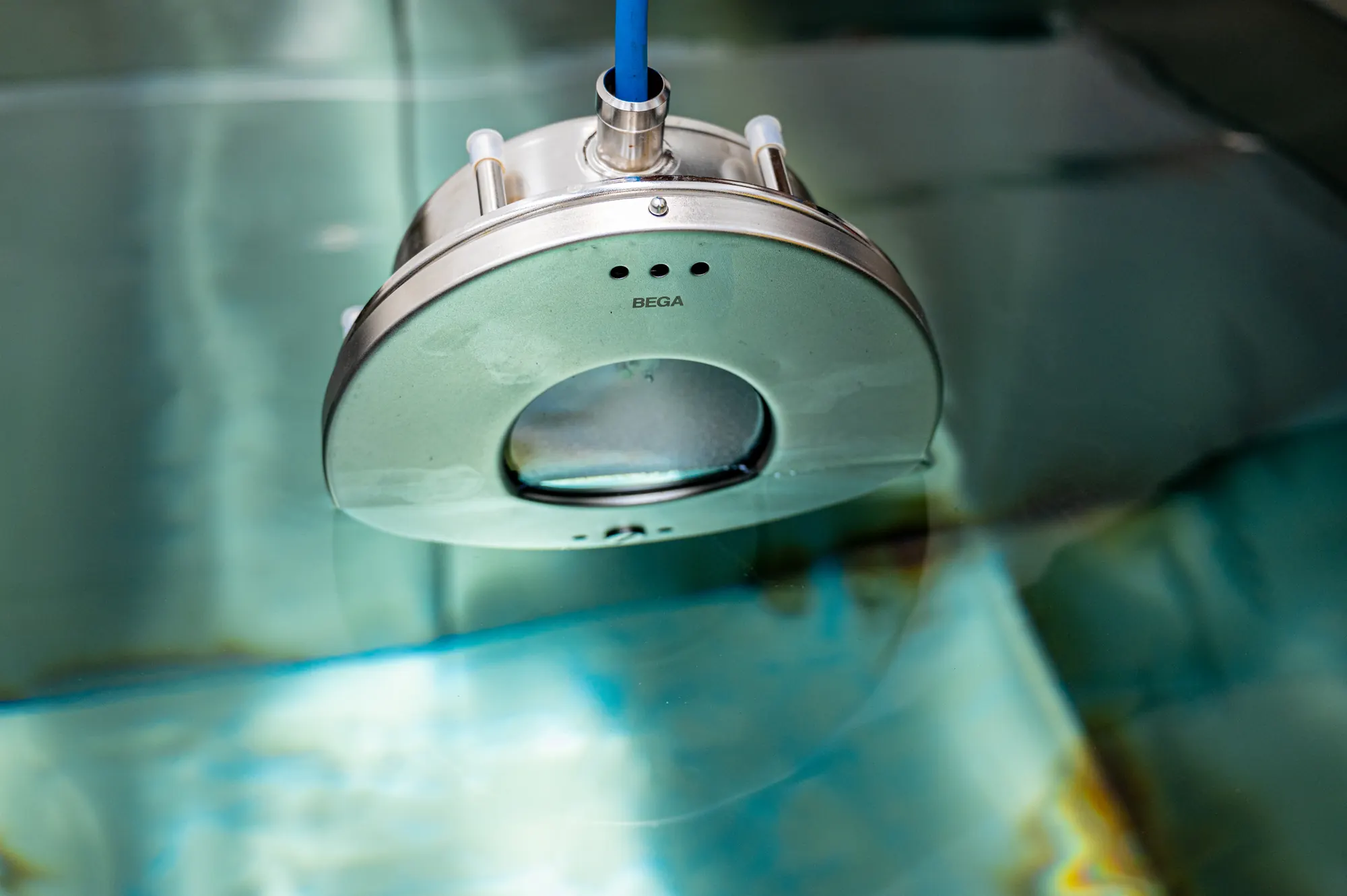
Water protection
Water is put on the enclosure the way weather and washdown would, and the luminaire is opened afterwards and examined for ingress. The five severities are different rigs rather than different settings: IPX3 and IPX4 sweep an oscillating tube of nozzles across the sample through 120°/60° and roughly 180° either side, IPX5 and IPX6 direct a hose at it from every direction, and IPX7 submerges it for half an hour. What the test settles is the second digit of the product's IP rating.
Severities- IPX32.3 L/minRain-proof
- IPX43.5 L/minSplash-proof
- IPX512.5 L/minJet-proof
- IPX6100 L/minPowerful jet-proof
- IPX71 m · 30 minWatertight
Within the accredited scope
Standards- IEC 60598-1:2020 RLV clause 9.2.4
- IEC 60529:1989+AMD1:1999+AMD2:2013 clause 14.2.3
- IEC 60598-1:2020 RLV clause 9.2.5
- IEC 60529:1989+AMD1:1999+AMD2:2013 clause 14.2.4
- IEC 60598-1:2020 RLV clause 9.2.6
- IEC 60529:1989+AMD1:1999+AMD2:2013 clause 14.2.5
- IEC 60598-1:2020 RLV clause 9.2.7
- IEC 60529:1989+AMD1:1999+AMD2:2013 clause 14.2.6
- IEC 60598-1:2020 RLV clause 9.2.8
- IEC 60529:1989+AMD1:1999+AMD2:2013 clause 14.2.7
Instruments- Oscillating tube
- IPX5 hose nozzle
- IPX6 hose nozzle
- Immersion tank
Dust and solid object protection
The luminaire is held in a chamber of circulating talc, in most cases with a partial vacuum drawn through the enclosure so that dust is pulled toward every seal it has. IP5X is passed when whatever gets in cannot interfere with operation or safety; IP6X only when nothing gets in at all. With the water digit this completes the IP rating.
Severities- IP5XDust-protected
- IP6XDust-tight
Within the accredited scope
Standards- IEC 60598-1:2020 RLV clause 9.2.1
- IEC 60529:1989+AMD1:1999+AMD2:2013 clause 13.5
- IEC 60598-1:2020 RLV clause 9.2.2
- IEC 60529:1989+AMD1:1999+AMD2:2013 clause 13.6
Instruments- Dust test chamber
Humidity test
A climatic chamber holds the luminaire at high humidity for the period the standard prescribes, reproducing what storage, transport and a damp installation do to it over months. What matters is the state it comes out in: insulation resistance and electric strength are measured, and housings, gaskets and optics are examined once the moisture has had time to work.
Within the accredited scope
Standards- IEC 60598-1:2020 RLV clause 9.3
Instruments- Temperature / humidity chamber
Endurance test
The luminaire runs continuously in a heated chamber at the temperature its class allows, including the abnormal circuit conditions the standard's Annex C sets out, while temperatures are logged at the points Annex K identifies. It is the test that separates a product which works from one which keeps working: thermal drift, component ageing and premature failure surface here rather than in the field.
Within the accredited scope
Standards- IEC 60598-1:2020 RLV clause 12.3
- IEC 60598-1:2020 RLV Annex K (Temperature measurement)
- IEC 60598-1:2020 RLV Annex C (Abnormal circuit conditions)
Instruments- Temperature / humidity chamber
Salt spray test
An artificial coastal climate — heat, salt fog and mould — held continuously against the sample for the exposure the specification calls for, after which housings, fixings and finishes are examined for corrosion. It is the standard evidence for anything mounted outdoors near the sea, or anywhere the air carries salt.
Within the accredited scope
Standards- ASTM B117-19
Instruments- Salt spray chamber
Impact resistance
A pendulum or free-fall hammer strikes the enclosure with a measured energy, and the luminaire is then examined for damage that compromises protection or safety. The IK code is a ladder rather than a label: IK01 lands 0.14 joules and IK10 lands 20, which is more than a hundred times as much. Lightship runs the four severities at the top of that ladder.
Impact energy- IK010.14 J
- IK020.2 J
- IK030.35 J
- IK040.5 J
- IK050.7 J
- IK061 J
- IK072 J
- IK085 J
- IK0910 J
- IK1020 J
Within the accredited scope
Standards- IEC 62262:2002 clause 4.2, clause 5, clause 6
- IEC 60068-2-75:2014 clause 5, Annex A, Annex D
- IEC 60598-1:2020 clause 4.13.1
- IEC/TR 62696:2011 clause 3.2, clause 3.3, clause 3.4
Instruments- IK level tester (07–10)
- Measuring tape
Electrical Testing
How the product behaves as an electrical load, and how faithfully its driver serves the LEDs behind it. Power quality is where a luminaire's efficiency claim, its service life and its effect on the installation around it all meet.
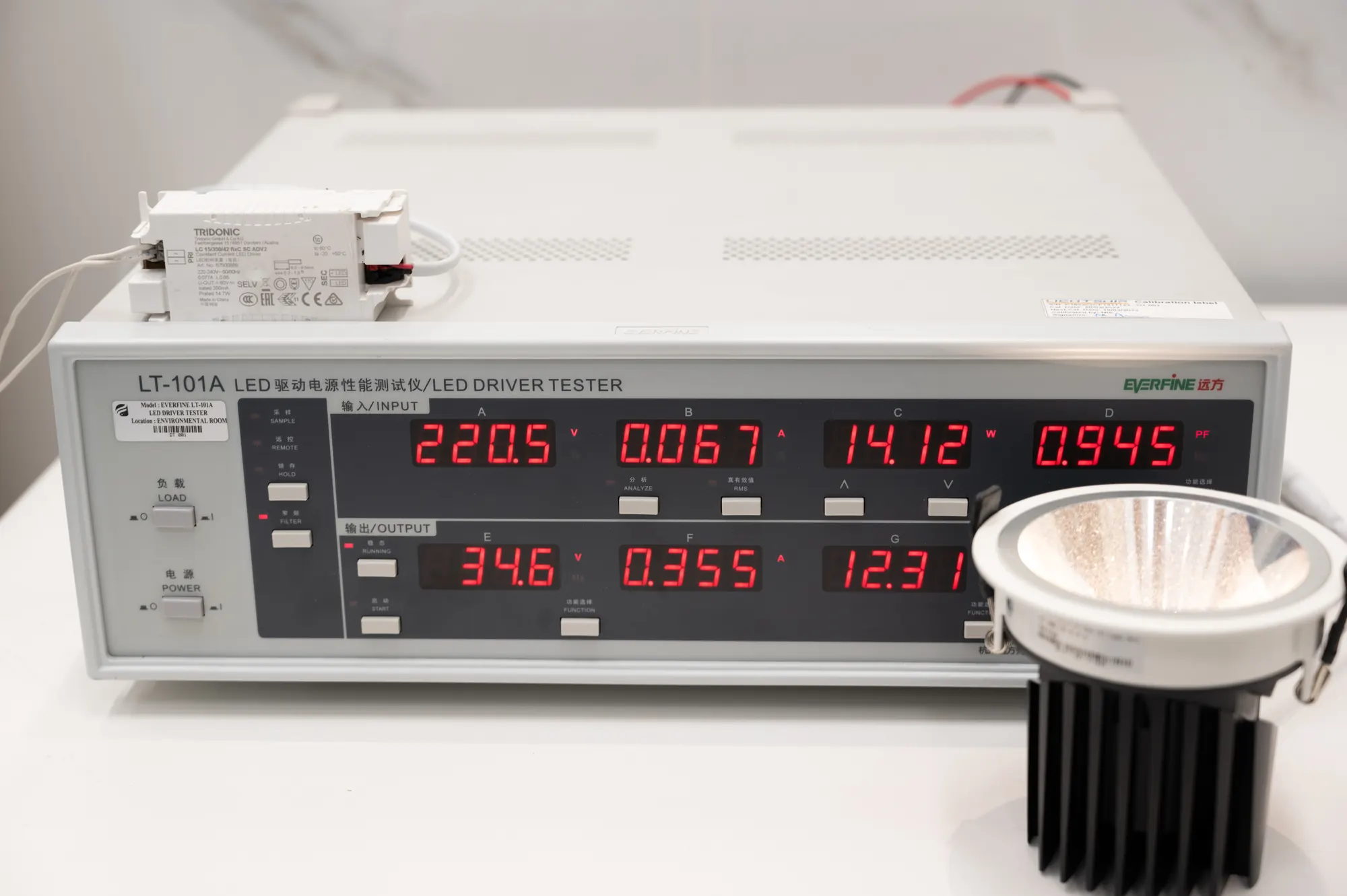
LED driver test
The driver is exercised across its range while input and output are measured together: voltage and current on both sides, active power, power factor, inrush, ripple, harmonic content and total harmonic distortion, start-up time and efficiency. Most of what a luminaire does wrong electrically, it does at the driver — this is where it becomes visible.
Within the accredited scope
Standards- SOP-7.2-16 (LED Driver Test)
- EVERFINE LT-101A, LED Driver Tester Manual
Instruments- LED driver testerEVERFINE LT-101A
Electrical and photometric measurements
The complete LM-79 measurement of a solid-state product as it is sold — driver and optic included, not the bare LED: total luminous flux, electrical power, system efficacy, luminous intensity distribution and colour quantities, all taken under the standard's own reference conditions. It is the measurement a specifier's photometric file comes from.
Within the accredited scope
Standards- ANSI/IES LM-79-19
Instruments- Goniophotometer system
Photometric Testing
How much light there is, where it goes and how well it holds up. These are the measurements a photometric file, an efficacy figure and a lifetime claim are built from — and the ones a specifier will check them against.
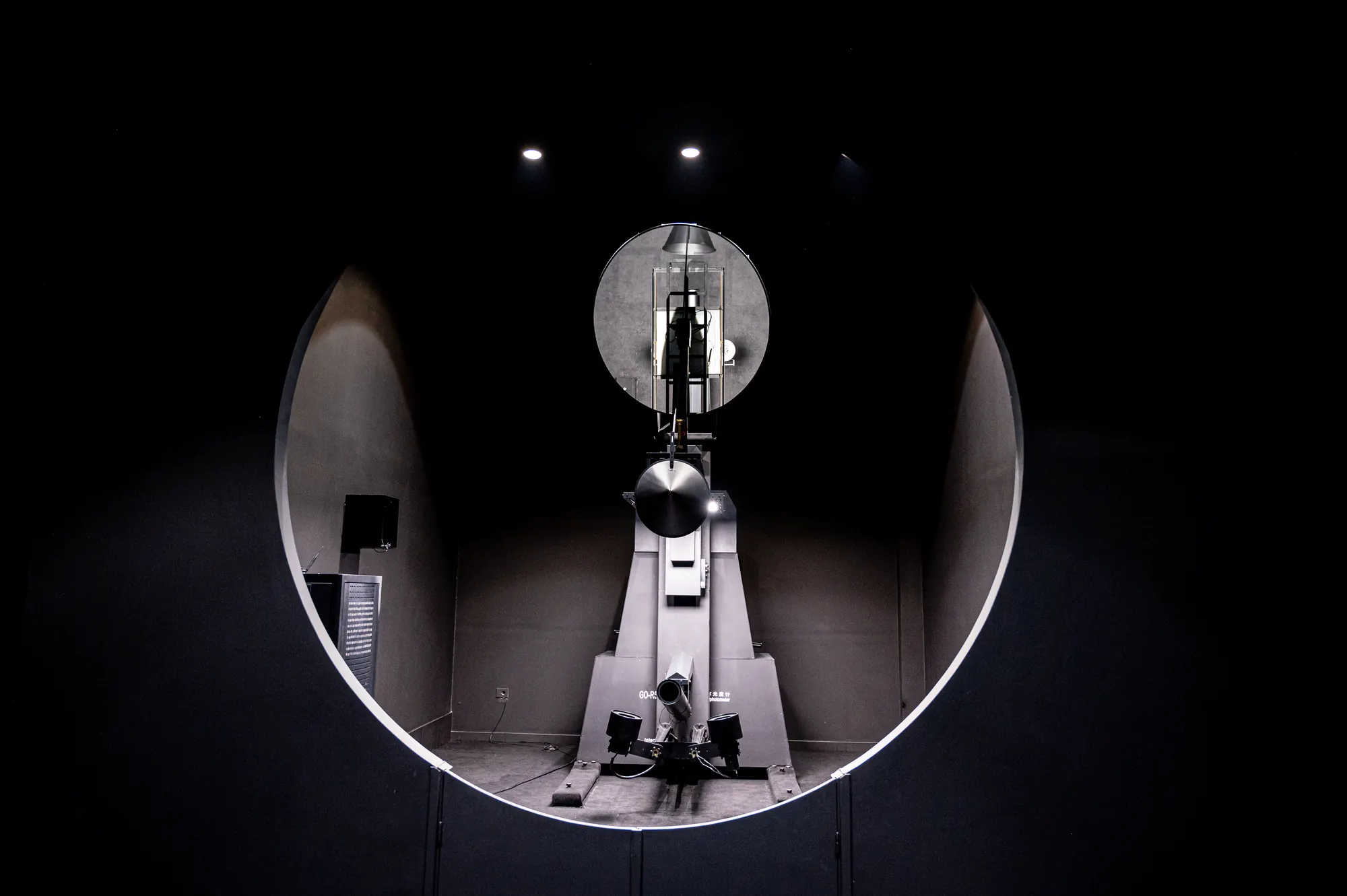
Luminous flux and colour maintenance
Lamps, light engines and luminaires are aged in a controlled system and measured at intervals, so the way their output and their colour actually move over operating hours is recorded rather than extrapolated from a datasheet. It is the evidence an L70 or L80 lifetime claim has to rest on.
Within the accredited scope
Standards- ANSI/IES LM-84-20
Instruments- Accelerated aging & life test system
In-situ temperature measurement (ISTMT)
Temperatures are read at the LED, at the power supply and along the thermal path, in the luminaire as it is actually built rather than on a bench rig — a thermal picture of the whole design. Overheated components are visible here long before they become field failures, and these readings are what a lifetime claim has to be anchored to.
Outside the accredited scope
Light output test
Illuminance, correlated colour temperature and colour rendering index measured in the scene itself — the room, the road, the façade — rather than in the laboratory. It answers the only question a completed installation is ever asked: is the light on the surface the light that was specified?
Within the accredited scopeAlso performed on site
Standards- SOP-7.2-12 (Light Output Test #2)
- ANSI/IES LS-4-20 clause 15
- EVERFINE SFIM-400, Spectral Flickering Irradiance Meter Manual
Instruments- Spectral flickering irradiance meterEVERFINE SFIM-400
Light flickering measurements
Flicker index and percentage flicker are measured against frequency and placed on the risk curves the standards draw. Flicker is largely invisible and entirely real: it is felt as fatigue and headache, and above certain depths and frequencies it becomes a genuine hazard around moving machinery.
Within the accredited scopeAlso performed on site
Standards- SOP-7.2-17 (Light Flickering Analysis)
- EVERFINE LFA-3000, Light Flicker Analyzer Manual
Instruments- Light flicker analyzerEVERFINE LFA-3000
Glare measurement
Luminance is measured across the field of view and resolved into the ratings a lighting scene is judged by — UGR for interiors, GR and TI for roads and outdoor areas, to the requirements of CIE 115. Glare is what makes a technically correct installation uncomfortable to be in, and it is only measurable in place.
Within the accredited scopeAlso performed on site
Standards- SOP-7.2-15 (Light Glare Measurements Test)
- EVERFINE LGM-200B, Lighting Glare Measurement System Manual
Instruments- Glare measuring systemEVERFINE LGM-200B
Colorimetric Testing
Light and materials described as colour: what a surface returns, what a diffuser passes, and where a finish sits in colour space. Colour is the part of lighting quality people notice first and specify least precisely.
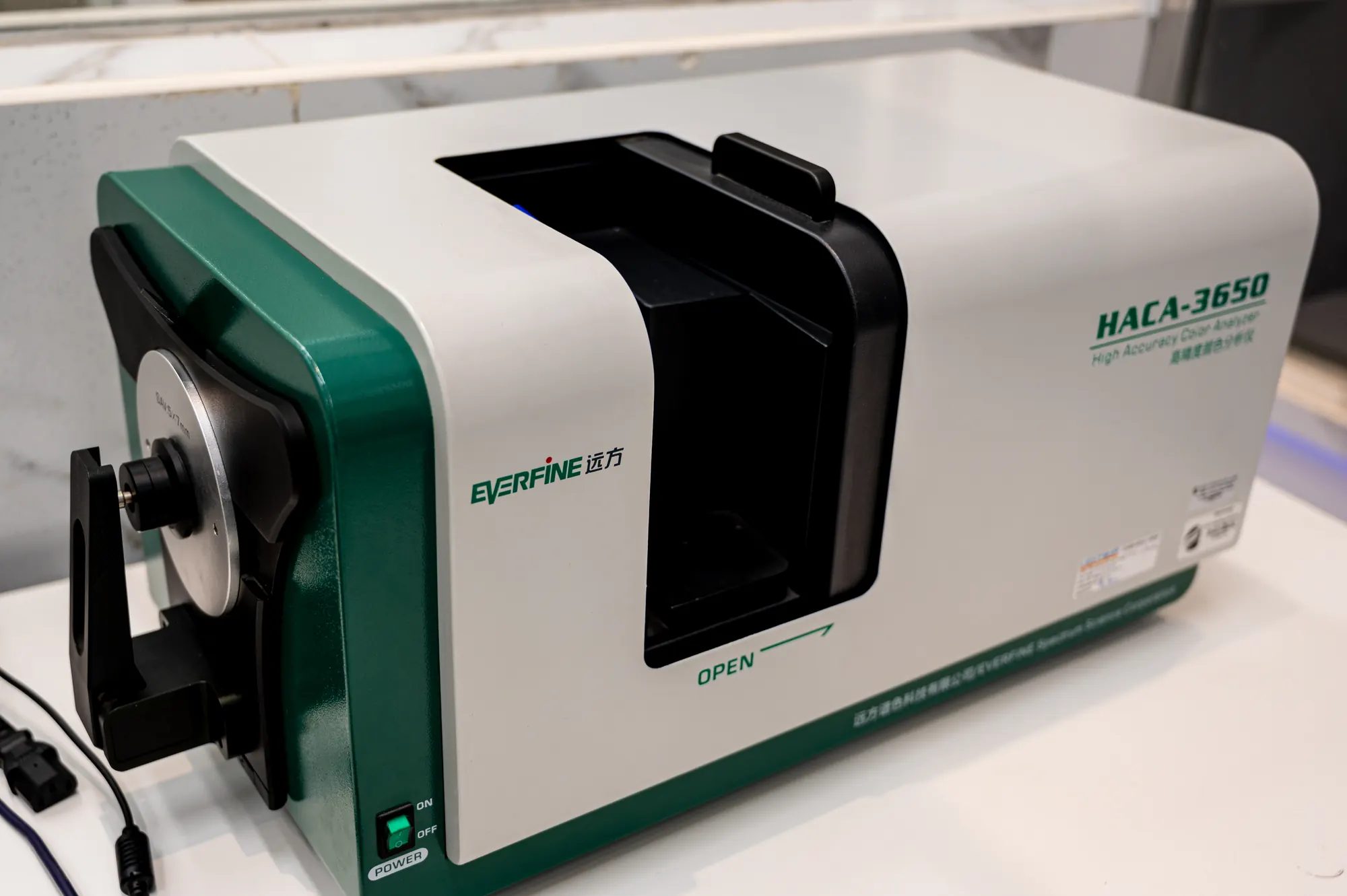
Reflectance measurements
A high-accuracy spectral instrument reads how much light a surface returns, wavelength by wavelength. Reflectance decides how much of what a luminaire emits ever reaches the task, which is why a ceiling, a wall finish or a reflector material belongs in the lighting calculation as much as the luminaire does.
Within the accredited scope
Standards- SOP-7.2-14 (Color Analysis Test)
- EVERFINE HACA-3650, High Accuracy Color Analyzer Manual
Instruments- High accuracy color analyzerEVERFINE HACA-3650
Transmittance measurements
The same spectral measurement taken through a material rather than off it: how much light a diffuser, lens or glazing passes, and how evenly it passes it across the spectrum. It is the difference between a stated lumen output and the lumens that actually leave the fitting.
Within the accredited scope
Standards- SOP-7.2-14 (Color Analysis Test)
- EVERFINE HACA-3650, High Accuracy Color Analyzer Manual
Instruments- High accuracy color analyzerEVERFINE HACA-3650
CIELab colour coordinates
The colour of a material located as three coordinates — L* for lightness, a* and b* for the two colour axes — so that two finishes can be compared as a number instead of by eye, and a production batch can be held to the sample that was approved.
Within the accredited scope
Standards- SOP-7.2-14 (Color Analysis Test)
- EVERFINE HACA-3650, High Accuracy Color Analyzer Manual
Instruments- High accuracy color analyzerEVERFINE HACA-3650
Coating Testing
Whether the finish will stay on and stay protective. Coating is the thinnest part of a luminaire and usually the first to fail, which makes adhesion and thickness the cheapest evidence of durability there is.
Cross dry adhesion test
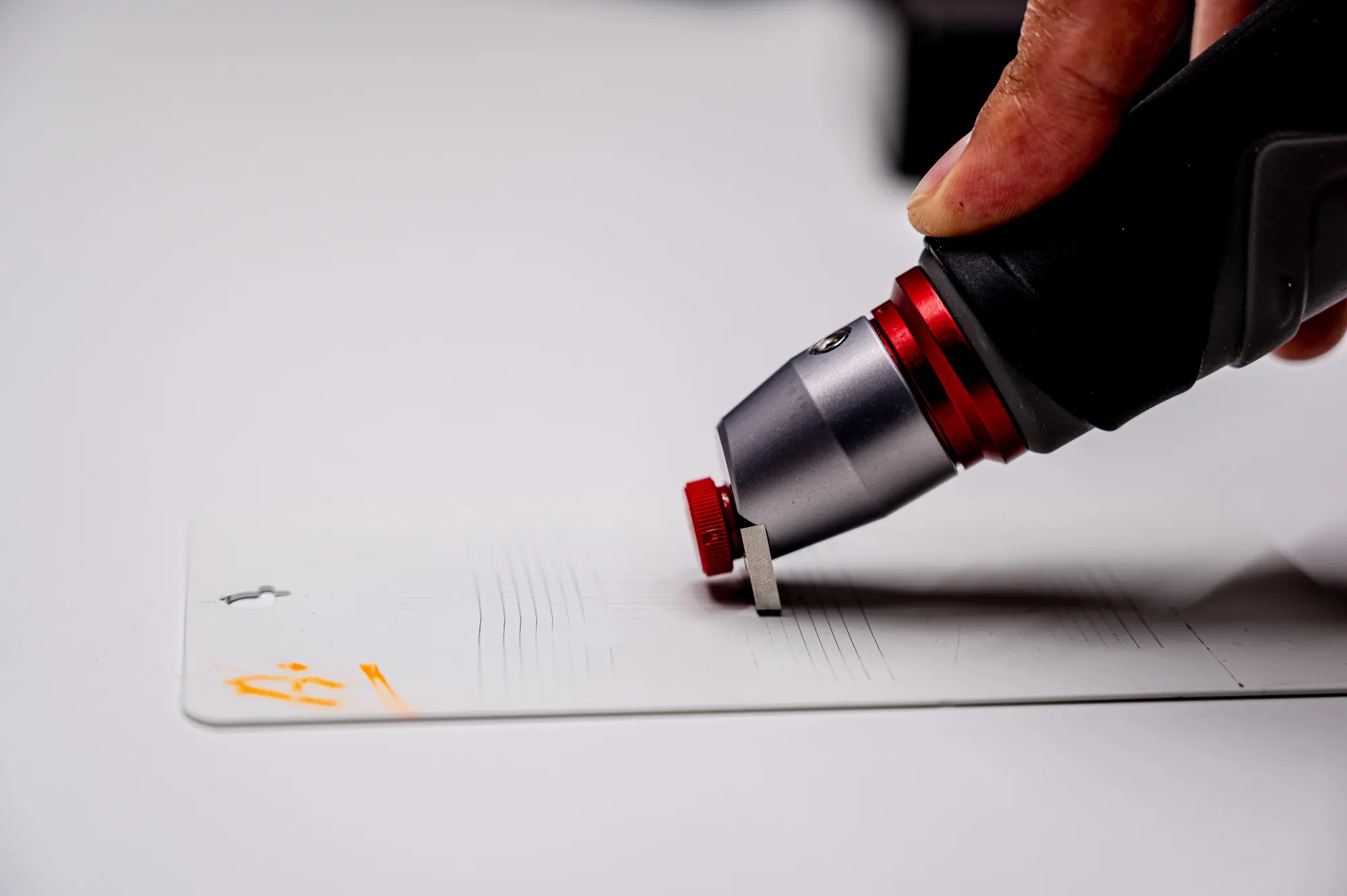
A cutting tool scores a lattice through the coating, right down to the substrate, and the cut edges are examined — with tape lifted off them where the standard calls for it — for how much of the coating has detached. The result is a classification from 0, where the cuts are perfectly clean, to 5, where the lattice flakes away. It is the quickest honest answer to whether a finish will stay on.
Within the accredited scope
Standards- ISO 2409:2020
Instruments- Multi-blade cutting tool
Coating thickness test
A calibrated probe reads the coating on a finished part without cutting into it. Thickness governs what the coating costs, how it looks and how long it protects what is under it, which makes it both the most-specified and the most-argued figure in a finish — and the one worth measuring rather than assuming.
Within the accredited scope
Standards- ISO 2360:2017
Instruments- Coating thickness meter
On-Site Testing
The instruments taken to the project. Some things can only be measured where the light is installed — and the accredited scope extends three of the optical methods to the customer's own site for exactly that reason.
On-site measurements at the installation
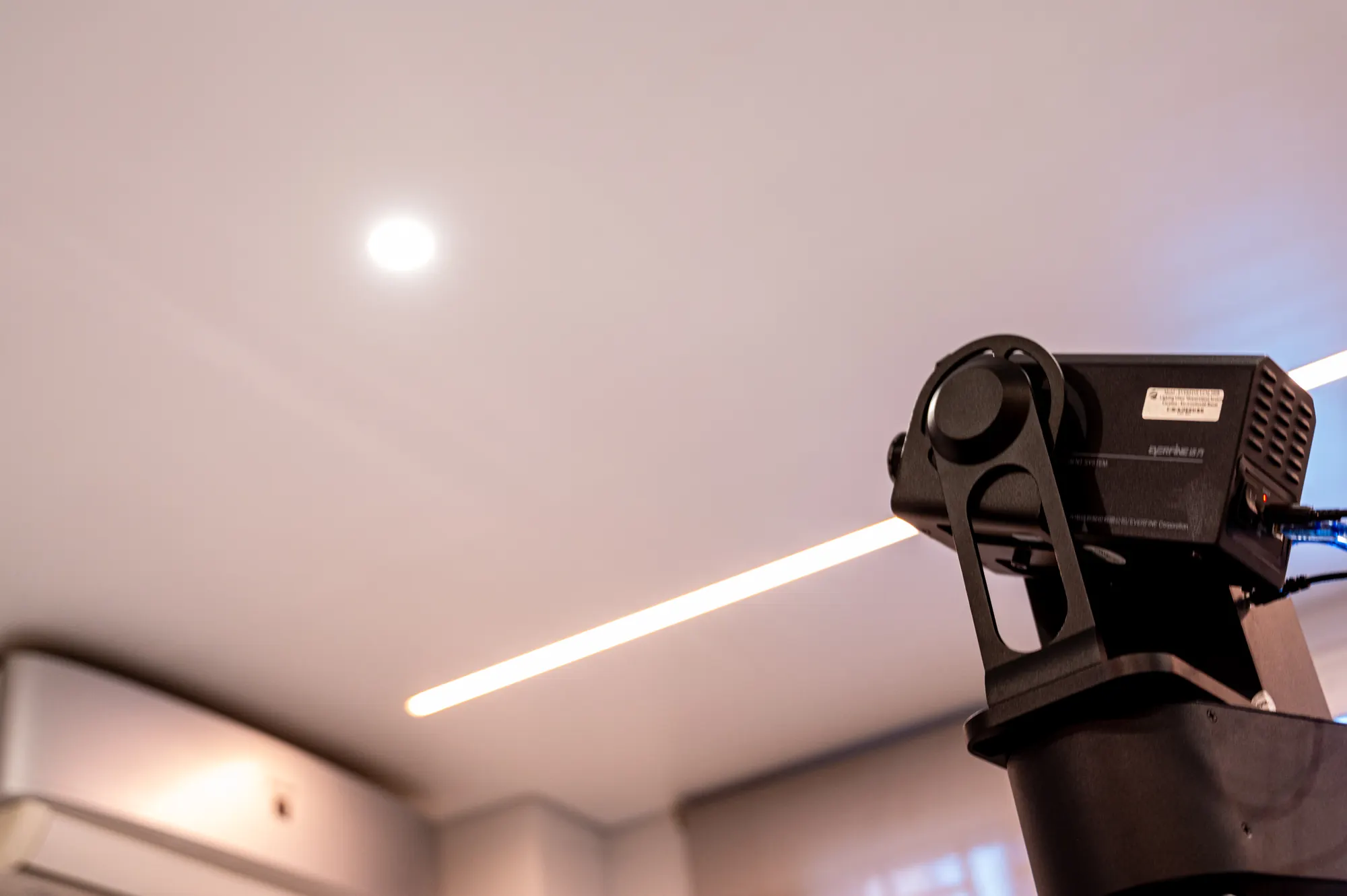
The laboratory's instruments taken to the project: illuminance and colour across the finished scene, glare ratings from the positions people actually occupy, flicker, and temperature readings on luminaires as they are installed. A product that measured correctly on the bench can still be wrong on site — mounted at the wrong height, aimed at the wrong angle, or running hotter in its housing than it ever did in the laboratory.
Within the accredited scopeAlso performed on site
Standards- SOP-7.2-12 (Light Output Test #2)
- ANSI/IES LS-4-20 clause 15
- EVERFINE SFIM-400, Spectral Flickering Irradiance Meter Manual
- SOP-7.2-17 (Light Flickering Analysis)
- EVERFINE LFA-3000, Light Flicker Analyzer Manual
- SOP-7.2-15 (Light Glare Measurements Test)
- EVERFINE LGM-200B, Lighting Glare Measurement System Manual
Instruments- Spectral flickering irradiance meterEVERFINE SFIM-400
- Light flicker analyzerEVERFINE LFA-3000
- Glare measuring systemEVERFINE LGM-200B
Test Your Product